
How to Get Court Records
For a public case or a list of events, begin with the official Holmes County Court Docket Search. The service runs in a browser. Its landing screen offers no case fields until it loads. So work only with the controls that appear. A docket can name the court, the case number, and the latest event. It does not promise that a document image, transcript, or certification waits online.
Common Pleas General Division, Domestic Relations, and county-operated Municipal Court files all sit with the Holmes County Clerk of Courts. That office keeps both the docket and the file. Probate keeps its own records. Juvenile has separate clerk functions and tighter access limits. The county publishes no copy-request form, mail process, document-viewer price, public-terminal detail, or turnaround estimate. When the live search does not answer the question, call the responsible office. Or visit its counter.
- Decide whether the need is for a docket event, a filed paper, a certified copy, a transcript, or an exhibit.
- Identify the court or division and keep the case number, if known, with the request.
- Use the live county docket search for public case information that it actually displays.
- For a Common Pleas pleading, contact the Clerk and state if a certified copy is required.
- Route Probate, Juvenile, transcript, and exhibit questions to the office or custodian that holds that record.
Note: A payment link can settle an eligible court obligation, yet it does not set a hearing, resolve a case, or order a certified copy.
Holmes County Court Record Search
Ohio runs no statewide public trial-court docket database covering Holmes County cases. The county portal is the official starting point. The Ohio Supreme Court's trial-court directory helps you find courts. It also lists local rules, but not individual cases. Pick the court that owns the matter before trusting any result. Adult traffic and ordinary misdemeanors usually land in Municipal Court. Felonies, General Division civil cases, and Domestic Relations matters go to Common Pleas. Estates and guardianships follow Probate. Juvenile matters run through a separate court path.
R.C. 2303.12 sets Ohio's general-docket and remote-access framework for Common Pleas clerks, subject to stated exceptions. It does not put every Holmes County document on screen in eServices. Check the live record, then ask the owning office whether a public copy exists. The official text is at Ohio's Common Pleas docket statute. That page spells out those docket duties in full.
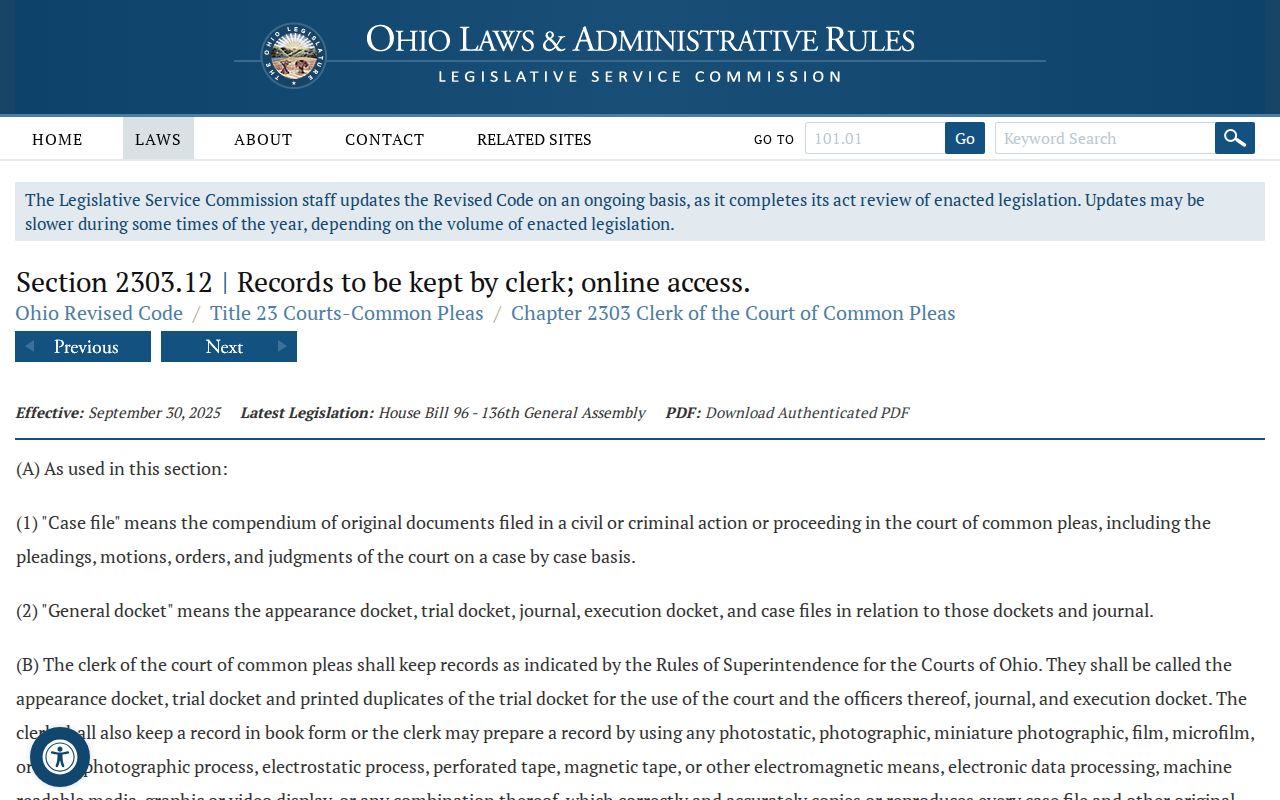
The statute frames who may reach a record and how. What you actually get for a given Holmes County file depends on the live county system and the court that holds the paper.
Types of Court Records
A court record is not one uniform product. The docket is a dated index of events. The case file is the stack of filed papers itself. A certified copy is a Clerk-certified true copy of a qualifying paper. A transcript records what was said. An exhibit is evidence admitted at a hearing or trial. Which item you want sets both the route and the price. Only that price can responsibly be quoted.
- Docket or event list: a chronological record of filings, settings, orders, and dispositions when public access is available.
- Filed pleading or order: a complaint, motion, judgment entry, notice, or other paper in the case file.
- Certified Common Pleas pleading: a copy certified by the Clerk under the local-rule process.
- Transcript: a record of courtroom proceedings, handled through the court-reporter channel.
- Probate or Juvenile record: a division-specific record with its own office route and possible restrictions.
Holmes County Court File Difference
A public event line can tell you a complaint was filed. The same goes for a pretrial order, notice, judgment entry, or motion. It hands you no text. It also does not turn a screen into a certified copy. Holmes County's official material offers no confirmed free PDFs. There are no downloads, accounts, document images, or fixed result layout. Treat the docket as a path to the file, never the file itself.
| Record | What It Answers | Holmes Custodian or Route |
|---|---|---|
| Docket | What was filed, scheduled, ordered, or decided | Live county search if it displays the case, then the owning court office |
| Case file | The actual pleadings, motions, orders, and judgments | Clerk for Common Pleas and Municipal files, or the separate Probate or Juvenile division |
| Certified copy | An official Clerk certification of a qualifying pleading | Common Pleas Clerk advance-request process |
| Transcript or exhibit | Proceeding record or admitted evidence | Ask the court office about the court-reporter channel |
What a Court Record Contains
Read any available docket in date order. Give the latest dated entry the most weight. Holmes local rules make room for filings and service-related docket work. Court notices, orders, continuances, pleas or trials, and dispositions also appear. Case-number formats, display codes, financial fields, document links, party columns, and case-status labels all depend on the live portal. Use the terms the case actually shows. Supplying an assumed Holmes code invites confusion.
| Case identifier | Use the exact number shown live; no Holmes County number format was confirmed in the reviewed sources. |
|---|---|
| Docket entry | A dated event showing a filing, notice, setting, order, or disposition. |
| Pleading | A formal filed paper, such as a complaint, answer, or motion, held in the case file. |
| Journal entry or order | A written court action; a later signed order carries more weight than an earlier request. |
| Disposition | The recorded case outcome, which should be read from the actual entry rather than inferred from a payment. |
Holmes County Court Reporter Records
Transcripts and exhibits do not travel the routine Clerk-copy road. Common Pleas Local Rule 2(B) excludes depositions from its certified-pleading rule. Transcripts of evidence are excluded too. The same rules leave trial and hearing exhibits with the court reporter unless the court orders otherwise. Ask the court office about the reporter route before requesting either item.
Exhibits also carry a clock. The reporter keeps them for 60 days after the last action in Common Pleas or an appellate court. After notice, the person who submitted an exhibit has ten days to retrieve it. Disposal follows. That rule promises no copy and no release to every asker. It simply explains why an exhibit may not be waiting at the Clerk counter.
Certified Copies and Fees
A certified copy of a Common Pleas pleading is available through the Clerk, but only on advance request and as office business permits, under Local Rule 2(B). The rule requires advance payment. The rate is $1.00 per certified page, and the Clerk certifies each copy as true and correct. Plain copies are different. So are Municipal records, Probate files, Juvenile files, transcripts, exhibits, searches, and mail requests; the rule sets no blanket price for any of them. One more caution applies here. The filing deposits on the Common Pleas cost page are filing costs, not a stand-in for copy charges.
| Item | Verified Amount |
|---|---|
| Certified Common Pleas pleading copied by the Clerk | $1.00 per page, after advance payment under Local Rule 2(B) |
| Plain copy, record search, or document-image charge | Not confirmed in the reviewed official material |
| Municipal, Probate, or Juvenile certification rate | Not confirmed; ask the division that keeps the record |
| Transcript or exhibit cost | Not confirmed; ask about the court-reporter route |
Holmes County Clerk of Courts
1 E. Jackson St., Suite 306
Millersburg, OH 44654
(330) 674-1876
Weekdays, 8:30 a.m. to 4:30 p.m.
Holmes County Probate Court Records
Probate is its own shop. Estates, guardianships, marriages, adoptions, name changes, and civil commitments all live with the Probate Court. They do not sit at the general Clerk counter. Its records run through a separate online-records path or its Suite 201 office. You can e-file documents with Probate. But the court asks that record requests and other correspondence come by phone or in person. Check the Probate Court contact page for the current route.
Juvenile cases work the same way. Go to the division first. The Juvenile Court keeps its own clerk functions and docket filings. Confidentiality rules can close off what you see. If a case does not show up in a public search, that alone proves nothing. It does not mean the case never existed. A broader request will not always get around a restriction.
Public Access and Sealed Records
Ohio's Rules of Superintendence 44 through 47 start from openness. Court records are public. A rule, a law, or a court order must say otherwise. So in Holmes County, start with the public portal. Ask what it actually displays. Then direct your question about access to the court that holds the record itself. Access turns on specific court-record rules and restrictions. It is not about how you label a request.
The limits are real. Personal identifiers and Rule 45-restricted information fall outside the statutory definition. That keeps them out of any public case document. Domestic Relations and Juvenile records carry extra online-access limits. Sealed or expunged criminal records follow their own statutes and orders. One more caution: seeing a case event on a docket does not make a restricted attachment public. A missing result tells you nothing about why it is missing.
Key Ohio access rules:
Sup.R. 44–47 defines court records, public access, and the process for requests or restrictions.
R.C. 2303.12 addresses Common Pleas general dockets and remote access, with stated exceptions.
R.C. 2303.901 addresses case documents, personal identifiers, and restricted information.
R.C. 2953.32 and R.C. 2953.34 govern sealing or expungement procedures and limited inspection.
Ohio's case-document and redaction statute spells out which parts of a Holmes County court record stay open and which get redacted.
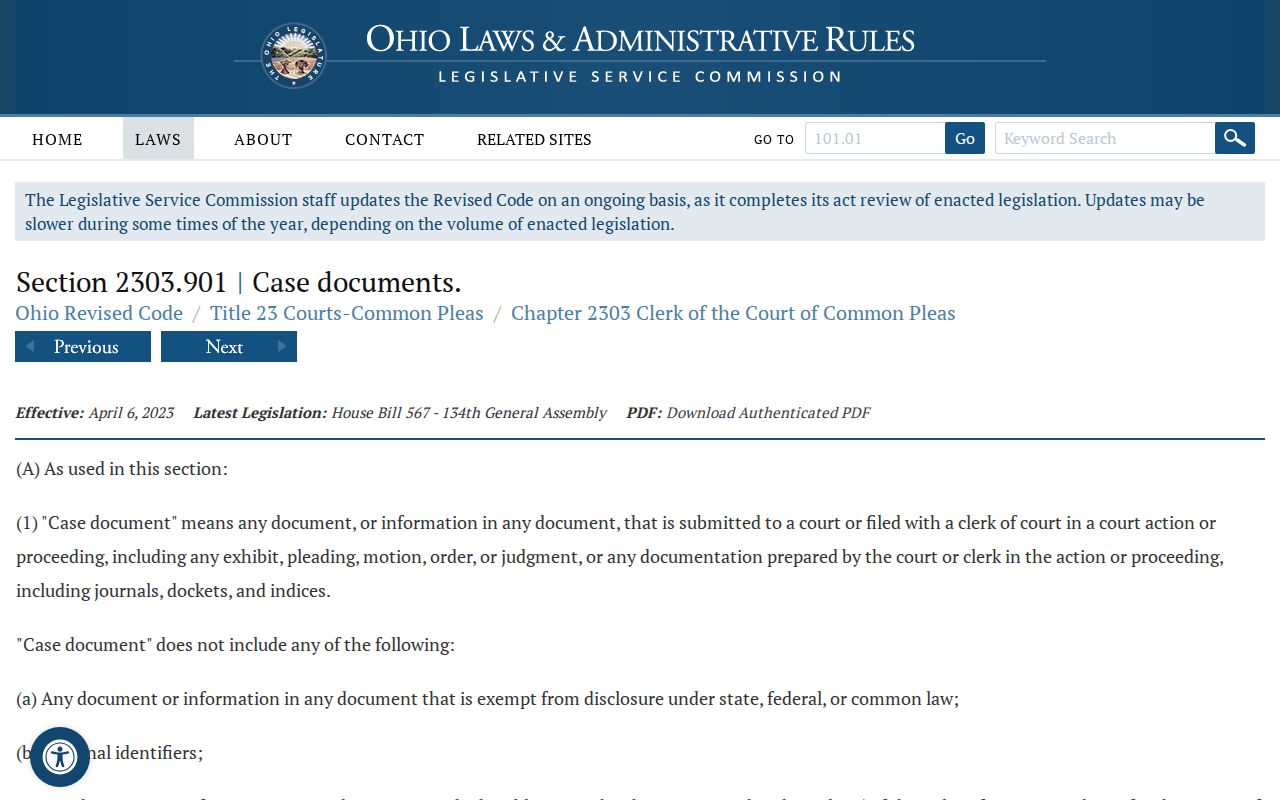
Redaction and restricted-access rules still apply even when a docket gives you the full public event history of a case.
Holmes County Court File Limits
Not every paper in a case ends up in the Holmes County court file. The Holmes Common Pleas local rules follow Civil Rule 5(D). That rule bars most discovery material from filing. The Clerk will not accept it. The exceptions are a court order that says otherwise, or a stated evidentiary or pending-motion reason. A document may be missing from the Clerk file. That alone proves nothing about a public portal hiding it. Fax filing counts as a filing procedure too. It is not a copy request and not proof of online availability.
Older Holmes County court records raise a different question. Ask the Clerk or the responsible division what format survives and what can still be pulled. The current courthouse dates to 1886. The story of earlier courthouses offers no official retention schedule or record-loss inventory. Nobody can say with confidence which early Holmes files made it.
Holmes County Court Record Dates
Start with the most recent dated notice, order, or docket entry you can find. Then ask for the copy. A motion to continue is only a request. It is not an order granting a continuance, and the distinction matters. In Common Pleas, the court's approved entry controls the schedule. So does the new date on it. If the question is whether a hearing is still set, call the court office rather than treating an old docket line as the final word.
Holmes County Court Record History
The Holmes County courthouse houses several courts, not one record system. Common Pleas, Municipal, Probate, and Juvenile all operate there. Each keeps its own separate record path. Which counter you go to depends on the court that kept the file, not on the shared address. That matters most when a request crosses case types.
Holmes County Court Record Questions
Keep any Holmes County records request tight. Name the court. Give the case number if you have it. Say what record type you need, and whether certification matters. Ask if the item is public or if another office holds it. For a docket, start with eServices, then fall back on the Clerk or the court itself. A certified Common Pleas pleading goes through the Clerk's advance-request route. Transcripts and exhibits? Ask about the reporter. Probate and Juvenile items go straight to that division. Each path is different, so a search, a copy, and a restricted record never blur together.
Ohio's public-records statute sets the baseline. It governs inspection and copies, yet court-specific access rules still control which office you actually ask.
That Ohio public-records baseline appears on the official page of the law itself.
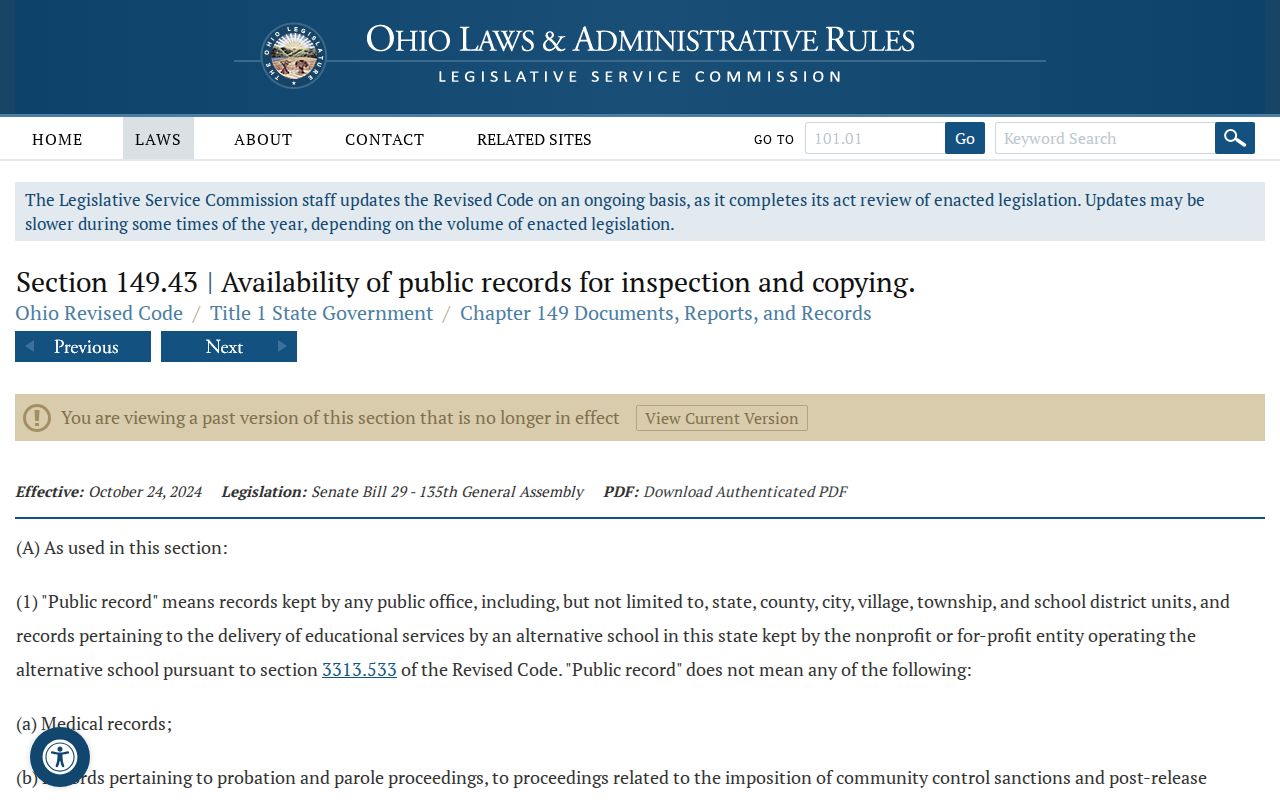
Statutes vs. court orders: The statute sits below several other controls. A Holmes County court can apply its own rules, division limits, or a specific order that governs a record, and those controls override the statute.